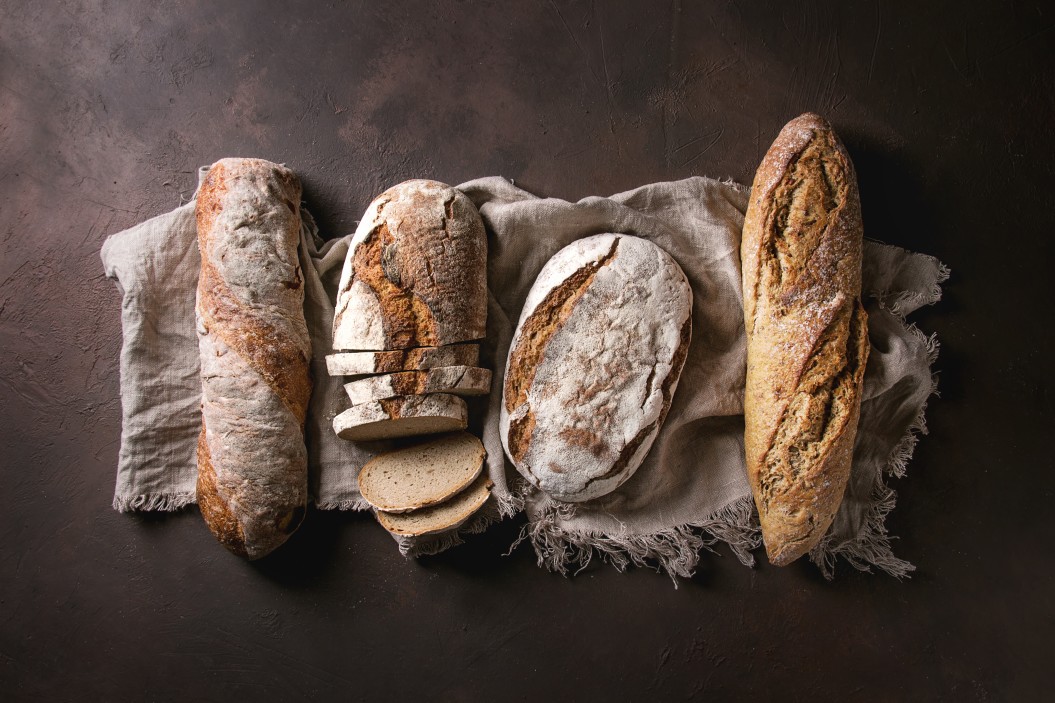
The Bread of Affliction
The unleavened bread is called the bread of affliction in the Old Testament. This is the very bread that Jesus had in His hands when He said, “This is My body which is given for you ….”(Luke 22:19) It was called the bread of affliction because the Hebrews came out of Egypt in haste. Making such an abrupt change was affliction to their souls. Imagine having to pickup and leave town for good, in just a few days. Making this sudden change would be quite disruptive and uncomfortable. This would certainly be affliction to one’s soul. The Hebrew’s coming out of Egypt is a picture of the Christians coming out of their sin. Coming out of sin is also an affliction to our souls. Making a change in one’s lifestyle is disruptive and uncomfortable because people are used to doing things a certain way. Initially, there is often some pain to being delivered from sin. Although deliverance from sin [... read more...]3You shall eat no leavened bread with it; seven days you shall eat unleavened bread with it, that is, the bread of affliction (for you came out of the land of Egypt in haste), that you may remember the day in which you came out of the land of Egypt all the days of your life. Deuteronomy 16:3
33And the Egyptians urged the people, that they might send them out of the land in haste. For they said, “We shall all be dead.” 34So the people took their dough before it was leavened, having their kneading bowls bound up in their clothes on their shoulders. 39And they baked unleavened cakes of the dough which they had brought out of Egypt; for it was not leavened, because they were driven out of Egypt and could not wait, nor had they prepared provisions for themselves. Exodus 12:33-34,39

The Body is for Doing, The Blood is the Life of the Body
The Body is for Doing, The Blood is the Life of the Body 0 Step back for a moment and just think about a body and blood; any body and any blood. What comes to mind when you think about blood? We know that the Bible teaches in the Old Testament that the life of the flesh is in the blood. Blood is all about life. The Body is for Doing, The Blood is the Life of the Body
When a member of one’s body, say a thumb or a toe, does not get blood flow, that member will die. The blood supplies each member of one’s body with sustenance, support, nourishment, or just plain life. The blood supplies every member with everything it needs to survive and do what it needs to do. We must understand that the meaning of the blood in this context is not lifestyle, but life in the sense of a source of nourishment [... read more...]23Only be sure that you do not eat the blood, for the blood is the life; you may not eat the life with the meat. Deuteronomy 12:23
Deliverance From Sin And Death
Let’s look at the Lord’s supper from another angle. Let’s start at the beginning. Deliverance From Sin And Death
God basically said to Adam, “Hey, don’t do this dumb thing or you will suffer a horrible consequence.” The consequence of sinning is death. Now, death is a big word. It means curses, eternal hell, physical death, tears, suffering and more. Sin leads to death. Romans 6:23 states that “…the wages of sin is death….” After Adam and Eve sinned, God looked down from heaven at man’s condition and saw two things that He did not like. He saw man doing stupid things on the earth, i.e., sin. And, He saw the horrible consequences man suffered and will suffer because of his sin, i.e., death. Sin and death are equally odious in God’s sight. Then God sent His Son to die for man in order to set him free from sin and death. The eating of the two elements of [... read more...]16And the LORD God commanded the man, saying, “Of every tree of the garden you may freely eat; 17but of the tree of the knowledge of good and evil you shall not eat, for in the day that you eat of it you shall surely die.” Genesis 2:16,
Deliverance Into Godliness And Life
The apostle Peter is implying in the above scripture that the great rewards and goals of the Gospel are life and godliness. It seems that the Christian walk can be categorized by these two great words. Let’s relate these two themes to the Lord’s Supper and the cross. Jesus delivered us from sin so that we can be godly. Godliness is the goal of the bread. Also, Jesus experienced death for us so that we can experience life. Life is the goal of the cup. In other words, the Holy Spirit is pleading and waiting for us to take our sin to the cross so that He can lead us into godliness (righteousness, obedience, etc.) By experiencing the deliverance of the cross, we are freed up to be lead by the Spirit into all godliness; i.e., to act like God would act. Also, the Holy Spirit wants us to experience deliverance from death (curses, hell, condemnation, etc.) so that [... read more...]3 As His divine power has given to us all things that pertain to life and godliness, through the knowledge of Him who called us by glory and virtue, 2 Peter 1:3
The Taste of the Bread & the Taste of the Cup
The cup of the Lord’s Supper is a delicious drink. It is called in Scripture, “the cup of blessing.” Whether it is wine or grape juice, this drink is physically pleasing to sip. This fact is not accidental. This delightful drink, this cup of blessing, stands for a delightful message: He suffered death for me that I might have life. He took my judgment on Himself. I don’t have to pay for my sins; instead, I get to inherit a blessing. When a judge declares you not guilty, you are delighted and relieved. This is an easy message to swallow and the drink that symbolizes this message is similarly easy to swallow. On the other hand, the unleavened bread of the Lord’s Supper, although being good for you spiritually, is simply not delicious. This flat bread does not have sugar on it. It has no custard filing inside of it. We don’t eat it with cream cheese and a [... read more...]16The cup of blessing which we bless, is it not the communion of the blood of Christ? The bread which we break, is it not the communion of the body of Christ? 1 Corinthians 10:16
The Unleavened Bread Primarily Means Sanctification & Righteousness
The meaning of the unleavened bread, as can be clearly seen in 1 Corinthians 5:6-8, relates to getting the sin out of one’s life; i.e., sanctification. The leaven is a type of sin, In Exodus 12:19-20 the Hebrews were instructed to purge the leaven out of their houses. This is a picture of the Christian purging the sin out of his life. We can plainly see that the unleavened bread of the Lord’s Supper pertains to our sanctification. Sanctification is the bread’s primary meaning. Healing for the body would be a parallel truth pertaining to the bread, but it is certainly not the bread’s primary meaning. Also, in 1 Corinthians 5:7, Paul states that we are unleavened. Many would want this to mean forgiven; but it actually means dead to sin, or crucified with Christ, or that we have been sanctified (Hebrews 10:10). The great theme in Scripture is that we are dead to sin and therefore have the [... read more...]6 Your glorying is not good. Do you not know that a little leaven leavens the whole lump? 7 Therefore purge out the old leaven, that you may be a new lump, since you truly are unleavened. For indeed Christ, our Passover, was sacrificed for us. 8 Therefore let us keep the feast, not with old leaven, nor with the leaven of malice and wickedness, but with the unleavened bread of sincerity and truth.
1 Corinthians 5:6-819 For seven days no leaven shall be found in your houses, since whoever eats what is leavened, that same person shall be cut off from the congregation of Israel, whether he is a stranger or a native of the land. 20You shall eat nothing leavened; in all your dwellings you shall eat unleavened bread.”‘ Exodus 12:19-20
10 By that will we have been sanctified through the offering of the body of Jesus Christ once for all. Hebrews 10:10